Guide · General
Most Used App in the World: 7 Ranked by Users and Time
Ranking the most used app in the world by active users, downloads and time spent, with the source, year and scope behind each figure.
By the Statlyst data desk · Updated November 9, 2026 · 10 min read
Naming one most used app in the world is the advice most roundups still sell. It fails when the count changes. Monthly active users, cumulative downloads, and average time spent can order the same apps differently. A figure is comparable to another only when the population and the date match.
The mobile-app index in DataReportal's July 2025 Global Statshot sets the leading app at 100 from observed smartphone activity in a large international sample. YouTube scored 100 and WhatsApp scored 87.6, so YouTube had approximately 14% more monthly active users than WhatsApp in that dataset. The index isn't an official count of unique people, and it can move with the sample, the platforms covered, and the month.
Business of Apps lists one compilation at Google 3.1 billion monthly active users, YouTube 2.9 billion, Chrome 2.8 billion, and WhatsApp 2.7 billion. Another 2025 ranking in that same compilation puts Facebook and YouTube near 2.5 billion monthly users, TikTok at 2.2 billion, and WhatsApp at 2.0 billion. Sensor Tower's State of Mobile 2025 separately counts 4.2 trillion hours in apps worldwide in 2024 and approximately 136 billion downloads across the Apple App Store and Google Play. The seven profiles below keep those measures apart.
Table of Contents
- 1. Facebook
- 2. YouTube
- 3. Instagram
- 4. WhatsApp
- 5. TikTok
- 6. WeChat
- 7. Telegram
- What each app offers and where it falls short
- How to Quote a Usage Ranking Without Misreading It
1. Facebook
Facebook mixes a personal feed with Groups, Pages, Reels, events, and Marketplace. On one monthly-user table it sits near YouTube. On a messaging table it doesn't, because chat is only one module. Rankings move with the metric and the date, so a single global label flattens a wide product.
What sits in one install
- Profiles and feeds: People post updates, follow Pages, and join Groups that run past a friend list.
- Video: Reels, live video, and longer clips compete for the same session as text.
- Local tools: Events and Marketplace show up in many countries, not all, so a world total hides a thinner feature set in some markets.
- Work tools: Creator and business surfaces sit beside the social feed on Facebook.
That range is why a reporter can cite Facebook for community reach and still be wrong to call it the most used app in the world on hours or on installs. Recommendations and promotional posts crowd the feed, so time in the app isn't the same as time with friends.
Practical rule: Name the surface. A Groups story and a main-feed story aren't one statistic.
Privacy settings and the volume of posts take time to manage. That friction matters when an account is both a personal record and a public page.
2. YouTube
Video is the cleaner split between reach and hours.
DataReportal's Digital 2025 analysis, published in February 2025, used third-party platform intelligence and found YouTube's active user base approximately 16% larger than WhatsApp's on Android activity in November 2024. Apple's privacy limits are why that cut stays on Android. It isn't a census of every account. The same report said global users spent almost twice as much time on YouTube as on TikTok. Active use and hours both put YouTube first among the social platforms in that comparison.
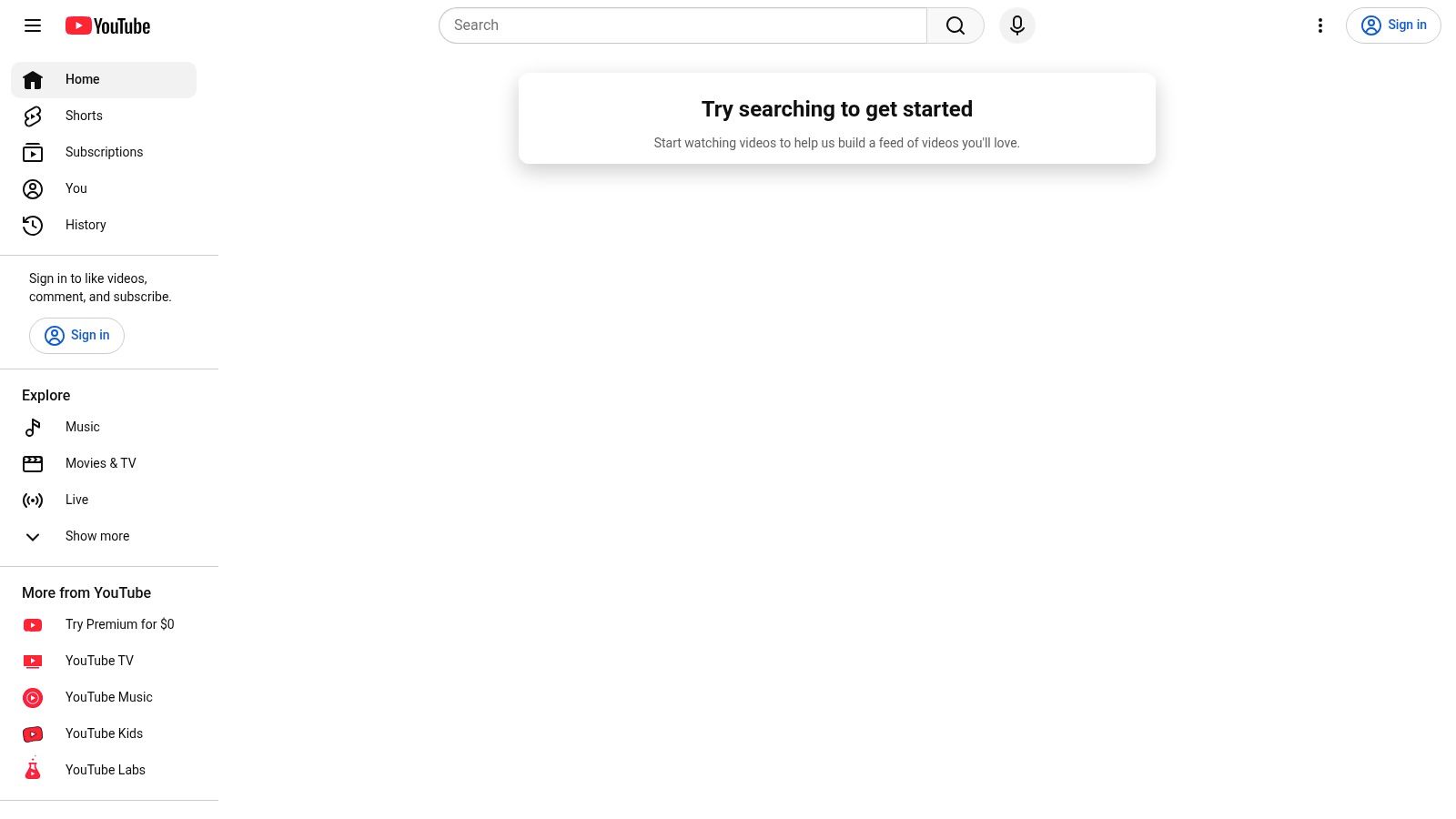
The YouTube homepage is the surface many users encounter before they open a channel.
Where the hours go
Shorts, long videos, livestreams, search, subscriptions, and playlists all sit in one session. Music and paid Premium options exist in many markets, with some tracks and viewing features cut by region or plan. Creators publish on their own channels. Ads and recommendations interrupt that path for people who don't pay.
Writers comparing streaming behavior can use Statlyst's video streaming statistics, where each figure stays tied to a source sentence. Phone, browser, and TV viewing often collapse into one product in user reports, which is why a mobile index and a time total can both lead with YouTube and still describe different behavior. Accuracy still depends on the uploader.
3. Instagram
Instagram is built on photos and video: grid posts, Stories, Reels, direct messages, and separate creator or business profiles. Shopping and discovery appear where the account and the country allow them. It isn't a messenger with a camera bolted on, and it isn't a long-form library.
A high rank here still isn't a monopoly on attention. DataReportal's Digital 2025 State of Social report counted 5.24 billion active social-media user identities in January 2025, equal to roughly two-thirds of the world's population, up 4.1% over the prior 12 months. Identities aren't unique people. Using GWI research on internet users worldwide, the same report put typical daily social time at 2 hours and 21 minutes and typical monthly use at 6.83 social platforms. Instagram is one of those platforms, not the whole afternoon.
How the product pulls attention
- Publishing paths: A grid post, a Story, and a Reel are three units inside Instagram.
- Messages: Direct and group chats sit beside public posting, so some sessions never touch the feed.
- Commerce: Shopping and monetization change by country and by account type.
The feed often ranks recommendations and sponsored posts ahead of accounts someone chose to follow. That design can lift time spent without lifting the count of people who opened the app. Say which of those two the sentence means.
4. WhatsApp
WhatsApp is the clearest case where a company-reported audience total has to be named before it is ranked.
Meta's announcement on February 12, 2020 said the service supported more than 2 billion users worldwide, put the launch in 2009, and recorded 900 million users in 2015, when the company called WhatsApp the world's most popular messaging application. That is a milestone series with changing wording, so a later headline total belongs beside its own release date and user definition rather than inside the 2020 sentence.
Country penetration gives a different cut. A 2025 compilation of WhatsApp usage statistics puts penetration among messaging-app users at 98.9% in Brazil, 97.1% in India, and 97.0% in Italy. In markets like those, the contest is less about finding first-time users than about keeping calls, groups and business chats inside the same account. The rates also show how one global total can hide very different local positions.
What the app is for
WhatsApp carries text, voice notes, and voice or video calls, plus groups, Communities, Channels, and Status. Personal messages and calls are end-to-end encrypted by default. Phone-number accounts won't suit everyone, business tools add surface area a simple messenger didn't have, and payment options vary by region.
Reach, default encryption and session length answer different questions. Statlyst's online privacy statistics is the paired page when the question is protection rather than headcount.
5. TikTok
Short video is where growth and a user total come apart.
Countly's app roundup reports approximately 1.59 billion TikTok users in early 2025 and roughly 17% year-over-year growth, versus about 4% for WhatsApp. The same write-up shows why a world rank misleads. WhatsApp is especially strong in India, Brazil, Europe, and Latin America. WeChat is concentrated primarily in China. Facebook Messenger is prominent in the United States, the Philippines, and parts of Europe. A fast-rising total can still trail an older messenger on another publisher's account table.
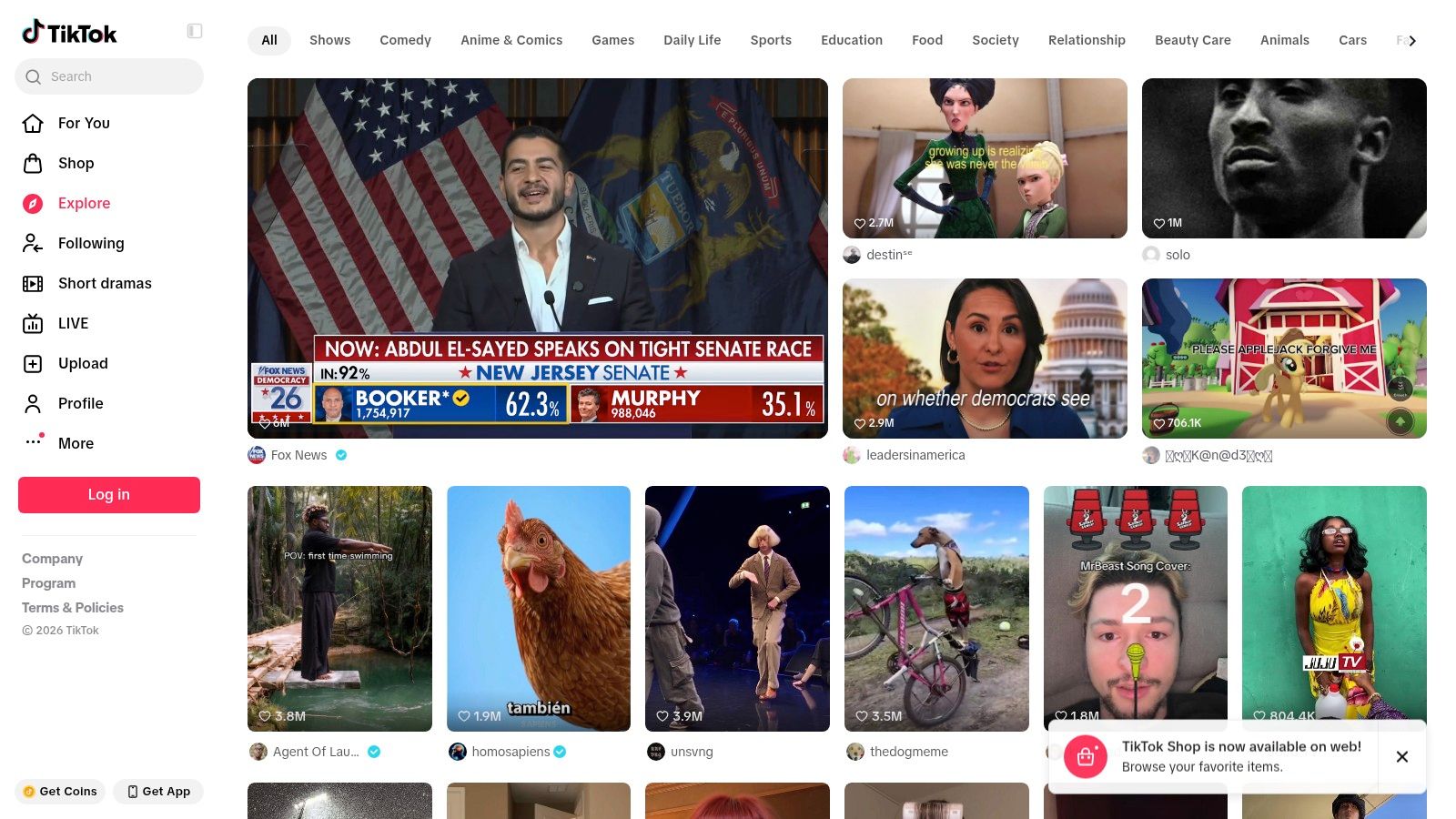
The product is a recommendation feed, not a contact list.
What a session contains
TikTok offers a For You feed, in-app editing, comments, creator accounts, and, in supported markets, livestreams and commerce. Local rules change access. Upload quality varies. The next video sits close to the current one, so average time can look large even when monthly users sit lower on a different table.
A growth rate and a user total answer different questions. Attach the early-2025 window and the publisher before either number moves into a headline.
Statlyst's screen time statistics is the place for hour-based comparisons that keep the original sentence. Don't borrow this app's growth rate to describe Instagram or YouTube.
6. WeChat
WeChat is a messenger that also tries to be a services layer. One-to-one and group chat, voice and video calls, Moments, official accounts, Mini Programs, and WeChat Pay, where the account and market allow it, share one install. A download is a weak proxy for use, because opening a Mini Program isn't the same act as sending a text.
Outside China, much of that services layer is thin or unavailable. Where the layer is live, it replaces separate apps for pay, bookings, and brand updates. A mid-pack global rank can be fair on worldwide accounts and wrong for a city where those services are daily infrastructure.
The store page shows the download step, not the depth of the ecosystem.
How to describe it in a citation
- Messaging: Chats and calls are the features that travel with the user.
- Services: Mini Programs cover tasks without a new install, mainly where the ecosystem is live.
- Pay: WeChat Pay depends on location and account status. It isn't a default worldwide wallet.
WeChat is the right name when the audience has contacts or businesses in China. It is a poor stand-in for a multi-country smartphone panel that barely covers that market. The broad menu can also feel heavier than a dedicated messenger for someone who only needs a thread.
7. Telegram
Telegram's slot on a most-used list moves with the source and the year. Without a figure that names the metric, this profile doesn't assign a rank. The product can still be compared.
It is a cloud messenger with private chats, voice calls, very large groups, public channels, bots, and an optional Premium tier. Channels suit organizations that broadcast updates. Groups suit communities that would outgrow a typical phone chat. Several devices stay in sync because ordinary chats live in the cloud.
That cloud default is the caveat readers skip.
Ordinary cloud chats aren't end-to-end encrypted by default. Secret Chats are the mode that adds end-to-end encryption.
Public channels and groups can also carry unreliable posts, so a large audience isn't a quality score. Free and Premium accounts don't share every limit. Telegram fits a messaging comparison when the question is broadcast plus large groups. It falls down the list when the question is default encryption or saturation in a specific country.
The homepage states the multi-device pitch more clearly than a store badge does.
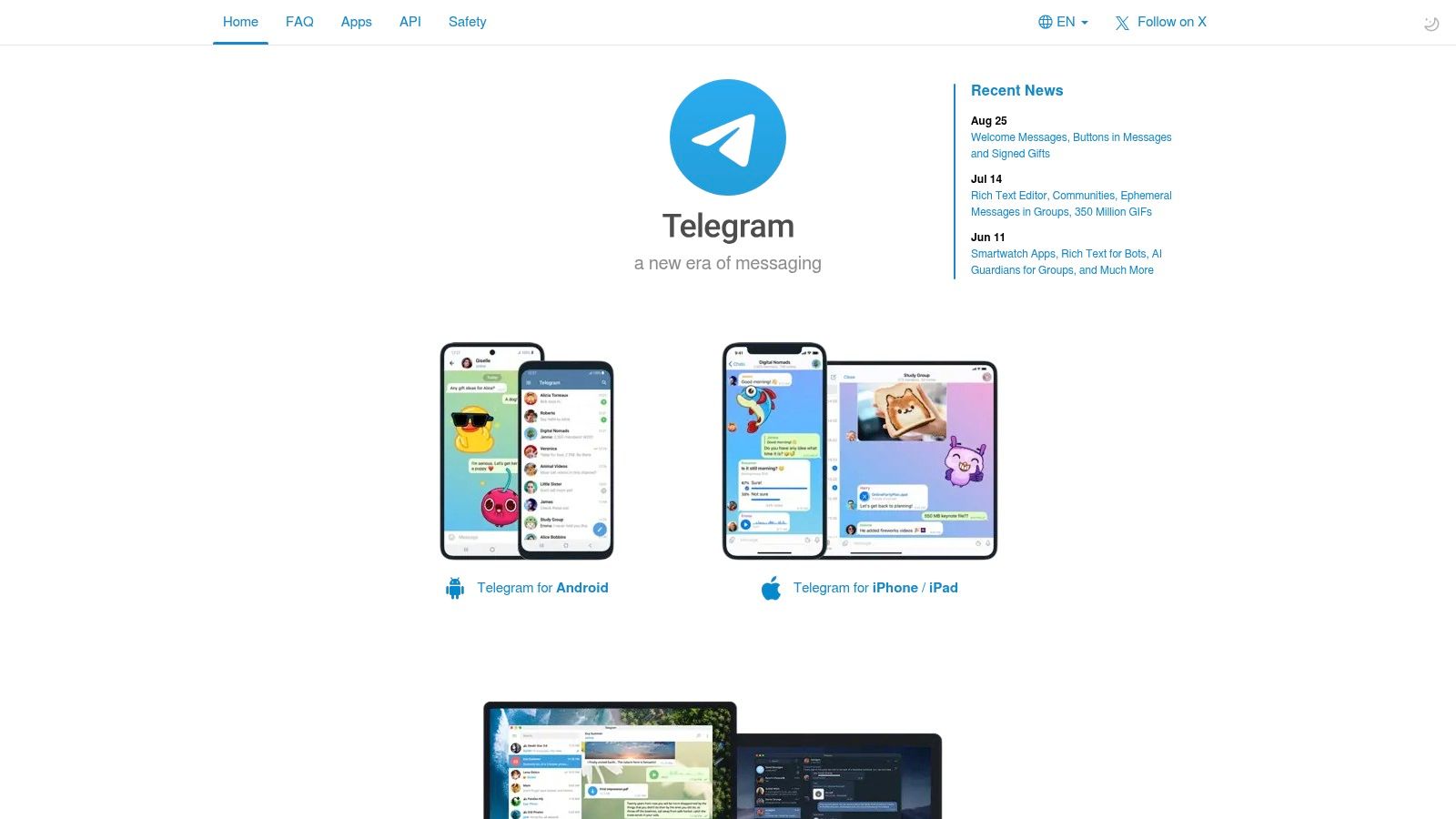
Anyone calling Telegram the most used app in the world needs the publisher, the month, and whether the number is monthly active users or downloads. Absent that trio, leave the rank blank.
What each app offers and where it falls short
| Item | Core Format | Notable Strength | Main Drawback |
|---|---|---|---|
| Social network with feeds, groups, video, events, and Marketplace | Combines community features and local discovery | Crowded feed and region-dependent features | |
| YouTube | Video platform for short and long videos, livestreams, and more | Vast content library across devices | Ads and recommendations can be intrusive |
| Visual social app for photos, videos, Stories, and Reels | Strong creator and brand ecosystem | Recommendations and sponsored posts can overshadow followed accounts | |
| Messaging and calling app with groups, Communities, and Channels | Encrypted personal chats and international communication | Phone-number-based accounts may not suit everyone | |
| TikTok | Short-form video app with a personalized recommendation feed | Easy content discovery and built-in video tools | Feed can encourage extended scrolling |
| Messaging and social app with payments and integrated services | Combines communication and services in one app | Many features are less useful or available outside China | |
| Telegram | Messaging app with large groups, public channels, and bots | Supports large communities across multiple devices | Cloud chats are not end-to-end encrypted by default |
How to Quote a Usage Ranking Without Misreading It
A usable citation names the metric, the publisher, the data year, and the population before it names a winner. Then it checks that the order still holds for that metric. Active use on a smartphone panel, company-reported accounts, hours in app, and store downloads have already produced different leaders here. Calling any one of them the most used app in the world, with the other measures implied, is the misread.
Say a desk is closing a story tonight. The reporter has a messaging milestone from the parent company, a mobile index from a later period, and country penetration for a few markets. Each line can be true. None of them authorizes the other two. Keep the source sentence beside the draft sentence, and delete any scope the source didn't use.
Statlyst lists each figure with the exact source sentence, the publisher, the data year, and a link to the primary release, so a claim can be traced before it is repeated. An editor can open that release instead of trusting a roundup that merged the rows.
Three checks do the rest.
- Match the unit: Monthly active users, downloads, and time spent answer different questions. A busy install chart can belong to an app that isn't the largest established base.
- Match the place: Global scale and local dominance diverge for messengers, short video, and super-apps. State the country, age group, or job the sentence is about.
- Match the date: Two announcements from one company, years apart, aren't one series unless the definitions line up. Say so when they might not.
Researchers should copy the population phrase, not a shortened label. "Messaging-app users" isn't "everyone online." "Android activity in one month" isn't "all phones, all year." Analysts sizing a campaign should add country penetration, daily use, and message volume before they treat reach as performance. Monthly users don't measure satisfaction or revenue.
The same fields apply beyond apps. Statlyst's Workplace Communication Statistics dataset contains 49 sourced figures, and the Hybrid Work Statistics dataset contains 46 figures from 12 publishers in a CSV file. If a number isn't in the release, it stays out of the sentence.
Before a ranking goes into a draft, open the figure on Statlyst and read the source sentence, the publisher, the data year, and the link back to the release. Use the citation option or the CSV when the story needs more than one row, and drop any most-used line that doesn't survive the metric it measured.
Questions or corrections: editorial@statlyst.com